ALPACA YOGA

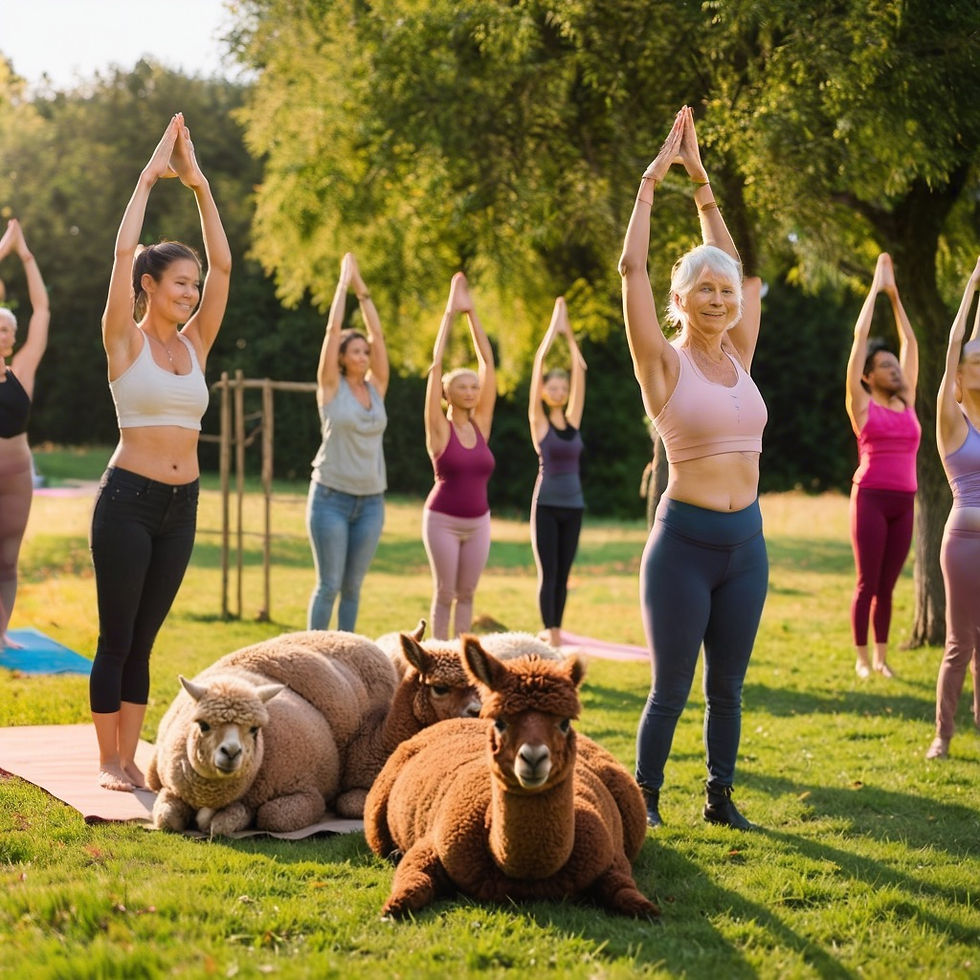
Once upon a time, nestled within the majestic peaks of the Andes Mountains, there lived a humble Alpaca shepherd named Kusi.
In the golden era of the Inca Empire, where the sun god Inti reigned supreme, Kusi tended to his prized herd with unwavering dedication.
The Inca Empire was a realm of wonder and innovation, where tradition and progress intertwined seamlessly.
Kusi, like many others, had heard whispers of the unique and mystical practice known as Alpaca Yoga, a secret closely guarded by the Inca royalty.
One day, as Kusi guided his alpacas through the emerald green valleys, he glimpsed the magnificent royal city of Cusco in the distance.
Intrigued and fueled by curiosity, he ventured into the heart of the empire.
As Kusi entered the bustling city, he marveled at its grandeur—the terraced fields, intricate stone architecture, and the vibrant tapestries that adorned the buildings.
It was a testament to the prosperity that the empire enjoyed under the rule of the mighty Inca rulers.
Word reached Kusi that the royal court practiced a unique form of Yoga, specifically tailored to harness the energy and vitality of the alpacas.
Eager to witness this extraordinary practice, he made his way to the sacred grounds where the royalty gathered for their daily routine.
There, under the watchful eyes of the high priest, the Inca royalty engaged in Alpaca Yoga—a harmonious blend of meditation, gentle stretches, and the presence of these graceful creatures.
The alpacas, revered for their serene nature, roamed freely among the practitioners, creating an ethereal atmosphere.
The health benefits of Alpaca Yoga were apparent in the radiant glow of the royalty.
They spoke of increased vitality, improved mental clarity, and a profound connection to the natural world.
Kusi observed with awe as the rulers moved gracefully through the postures, guided by the wisdom passed down through generations.
Intrigued by the potential benefits for himself and his alpacas, Kusi approached the high priest, seeking permission to partake in this ancient practice.
The high priest, recognizing Kusi's genuine curiosity, welcomed him into the sacred circle.
Under the watchful eyes of the alpacas, Kusi immersed himself in the world of Alpaca Yoga. The gentle hum of the wind, the warmth of the sun, and the rhythmic breathing of both man and beast created a symphony of tranquility.
Days turned into weeks, and Kusi discovered a newfound strength and resilience within himself. His alpacas, too, seemed to thrive under the shared energy of the practice. The bond between shepherd and herd deepened, and their journey through the Andean landscapes became a dance of unity.
Word of Kusi's transformative experience reached the ears of the Inca rulers. Impressed by his dedication and the harmony he had achieved with his alpacas, they invited him to share his insights with the royal court. Kusi, though initially hesitant, embraced the opportunity to bridge the gap between the simple life of a shepherd and the opulence of the empire.
As Kusi stood before the Inca rulers, he spoke of the profound connection forged through Alpaca Yoga. He described the benefits not only to the physical well-being of both man and alpaca but also to the spiritual harmony that could be achieved when humans and nature coexisted in perfect balance.
The rulers, recognizing the wisdom in Kusi's words, decided to integrate Alpaca Yoga into the daily rituals of the empire. The practice spread beyond the royal court, touching the lives of commoners and nobles alike. The Inca Empire, already flourishing, now radiated a sense of inner peace and vitality that resonated throughout the Andes.
And so, Kusi, the humble Alpaca shepherd, became a revered figure in the empire, not for conquering lands or amassing wealth but for discovering the profound art of harmony—within oneself, with the alpacas, and with the world that surrounded them. In the heart of the Andes, under the watchful gaze of Inti, the sun god, the legacy of Alpaca Yoga continued to flourish, weaving a tapestry of well-being that transcended time itself.


Comments